

問題:向きが分かっても、進み方が決まらないThe problem: a direction does not specify a route
例えば、次のような読み分けが必要になる。Consider these possible readings:
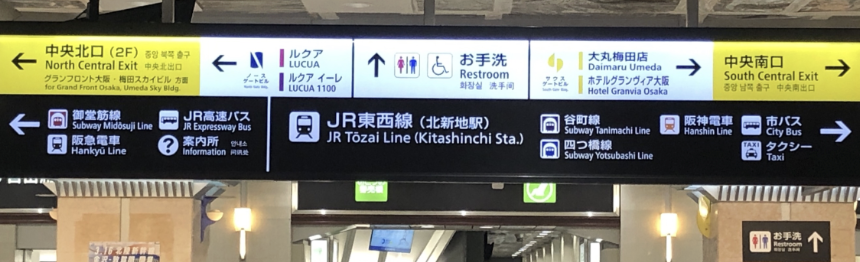
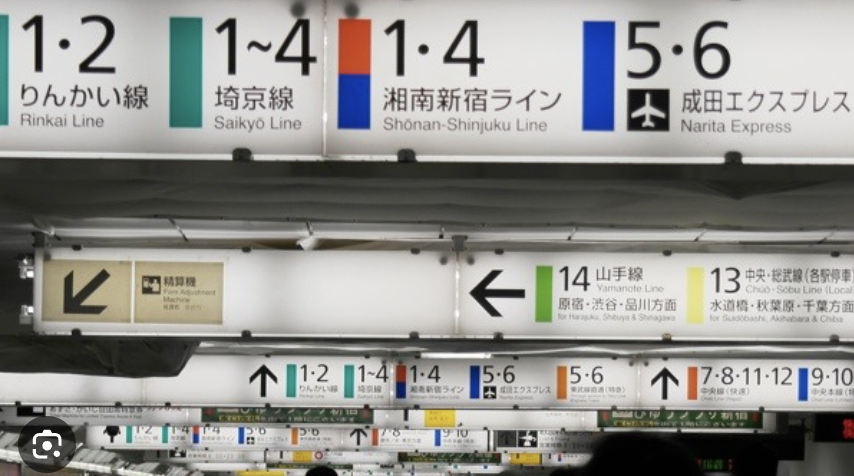
- ↑ 上向き:同じ階を直進するのか、上の階へ行くのか。↑ Upward: go straight on the same floor, or go upstairs?
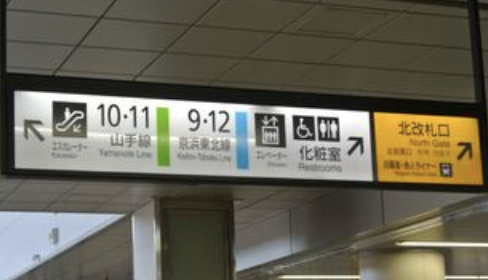
- ↗ 斜め:右斜め前の通路へ進むのか、右側の階段を上がるのか。↗ Diagonal: take a corridor ahead to the right, or climb stairs on the right?
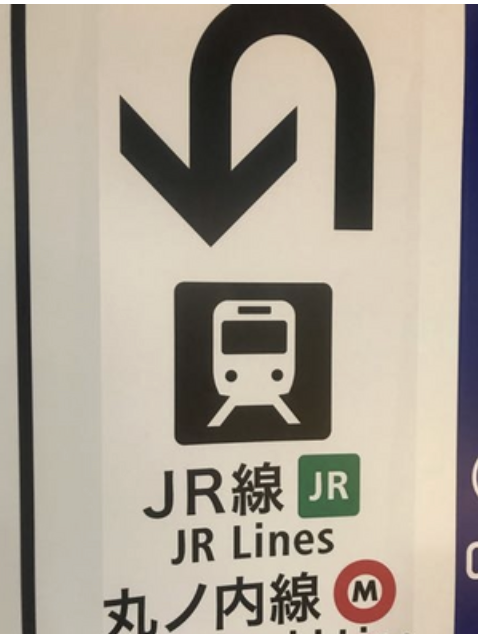
- U字:その場で回れ右をするのか、前へ進んで柱や階段の裏側へ回り込むのか。U-shaped: turn around here, or walk ahead and around a column or staircase to its far side?
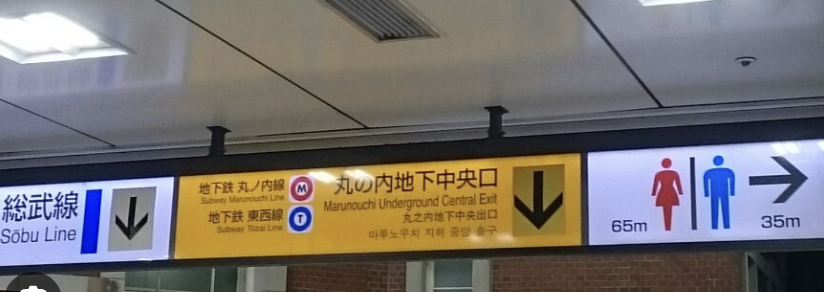
- ↓ 下向き:下の階へ降りるのか、看板の真下にある入口を示しているのか。↓ Downward: go downstairs, or use an entrance directly beneath the sign?
写真の矢印も、形だけを切り出すと解釈が分かれる。実際の案内は、併記されたマークや、現地の通路・階段と合わせて読むものだ。Isolated from their surroundings, the arrows in these photos also allow different readings. The actual instructions depend on accompanying pictograms and the layout of corridors and stairs.
原因:立体の空間と経路を、平面の記号に縮めているThe cause: a flat symbol leaves out spatial and route information
私たちは前後・左右・上下のある三次元空間を移動する。一方、看板は二次元だ。「奥へ進む」を紙面の「上向き」に置き換えると、実際に上へ移動する場合と同じ形になる。斜め矢印でも、床の上の斜め移動と、高さを変える移動を区別しにくい。We move forward and backward, left and right, and up and down in three-dimensional space. A sign is two-dimensional. Mapping “go forward” to an upward arrow gives it the same shape as “go up.” A diagonal arrow can likewise leave horizontal movement and a change in elevation hard to distinguish.
さらに、矢印には「どこで動きを変えるか」が省かれやすい。U字は折り返す形を示せても、今いる場所で回るのか、先の障害物を回り込むのかまでは示せない。つまり、移動する面・曲がる地点・目印との位置関係を、読み手が補っている。初めての駅や、階段が見えない場所では、その補完が難しくなる。Arrows can also omit where a movement should happen. A U-shape depicts a reversal but does not necessarily say whether to turn here or beyond an obstacle. The reader supplies the plane of movement, the turning point, and the relation to landmarks. That becomes harder in an unfamiliar station or when stairs are out of sight.
解決案:方向に加えて、場所と動作を示すPossible solutions: show the place and the action
- 動作を短く添える。「この階を直進」「右の階段で2階へ」「この先の柱を回り込む」と書けば、矢印が省いた情報を補える。Add a short action. “Straight ahead on this floor,” “Up the stairs on the right to level 2,” or “Go around the column ahead” supplies what the arrow leaves out.
- 目印を含む小さな経路図を添える。U字なら、現在地・柱・回り込む道を一緒に示す。「今すぐ曲がる」と「先で曲がる」を分けられる。Add a small route diagram with landmarks. For a U-turn, show the current position, the column, and the route around it. This distinguishes turning now from turning farther ahead.
- 矢印の奥行きと影で、向きを描き分ける。「前」は床から浮いて奥へ伸び、床に長い影が落ちる矢印。「上」は縦に立ち、真下に影が落ちる矢印にする。床との関係を描けば、移動する面の違いを示せるかもしれない。Use depth and shadows to distinguish orientations. For “ahead,” show an arrow floating into the distance with an elongated shadow on the floor. For “up,” show an upright arrow with a shadow beneath it. Its relation to the floor could help distinguish the planes of movement.
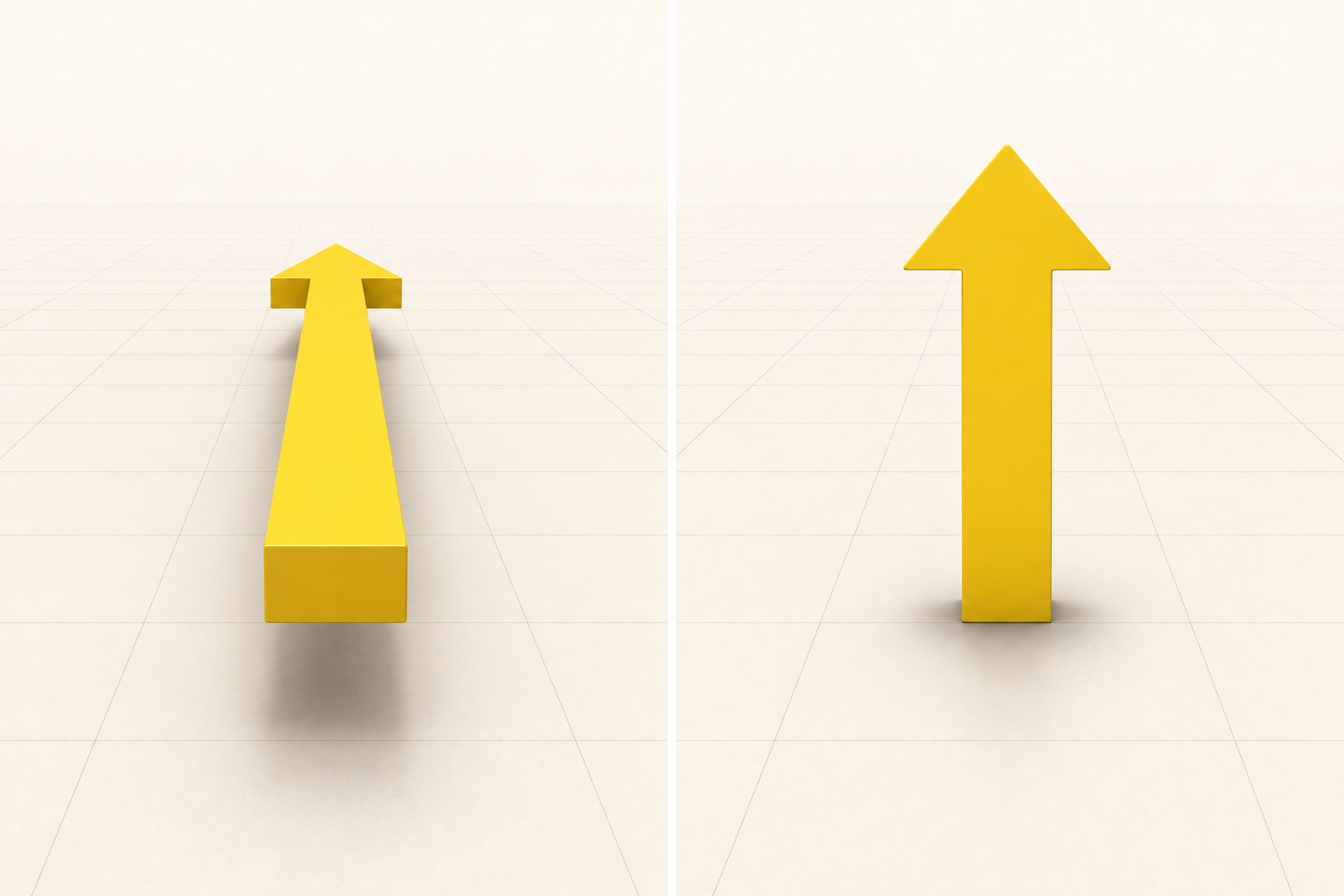
ただし、立体に描いても、見る角度によって奥行きは伝わりにくくなる。曲がる地点まで自動的に伝わるわけでもない。改善のポイントは、矢印を飾ることではなく、「どこで、どう動くか」を読み手の推測に任せすぎないことだ。Even a three-dimensional depiction can lose depth from some viewing angles, and it does not automatically identify a turning point. The useful test is whether the sign makes where and how to move clear enough without relying too heavily on the reader to infer it.