

ルールを破ったポスター A Poster That Breaks the Rules
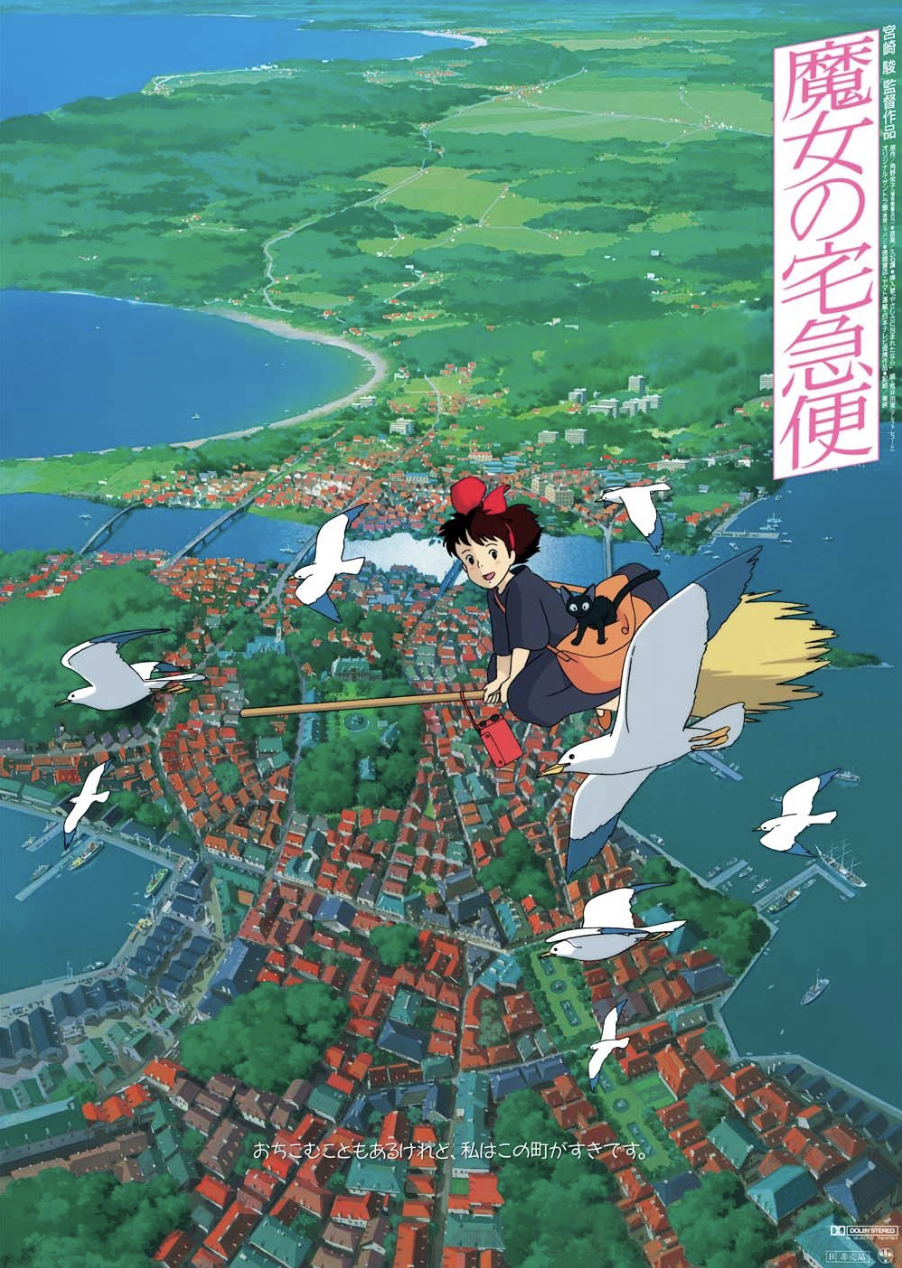
スタジオジブリ「魔女の宅急便」(1989)のポスター[1]。よく見ると、この絵は遠近法の決まりごとに従っていない。ひとつの画面に、複数のパースが同居しているのだ。写実の世界では、まずやらない描き方。美術予備校なら、先生に赤を入れられるたぐいの「誤り」である。でも、この「誤り」こそが、このポスターの魔法の正体だ。
A poster for Studio Ghibli's "Kiki's Delivery Service" (1989)[1]. Look closely: it doesn't follow the rules of perspective. Several perspectives share a single frame — not something you'd ever do in a realistic drawing. At an art prep school, this is the kind of "mistake" a teacher would mark in red. But this "mistake" is exactly where the poster's magic lives.
意図した歪みが生む浮遊感 The Float Born of Intentional Distortion
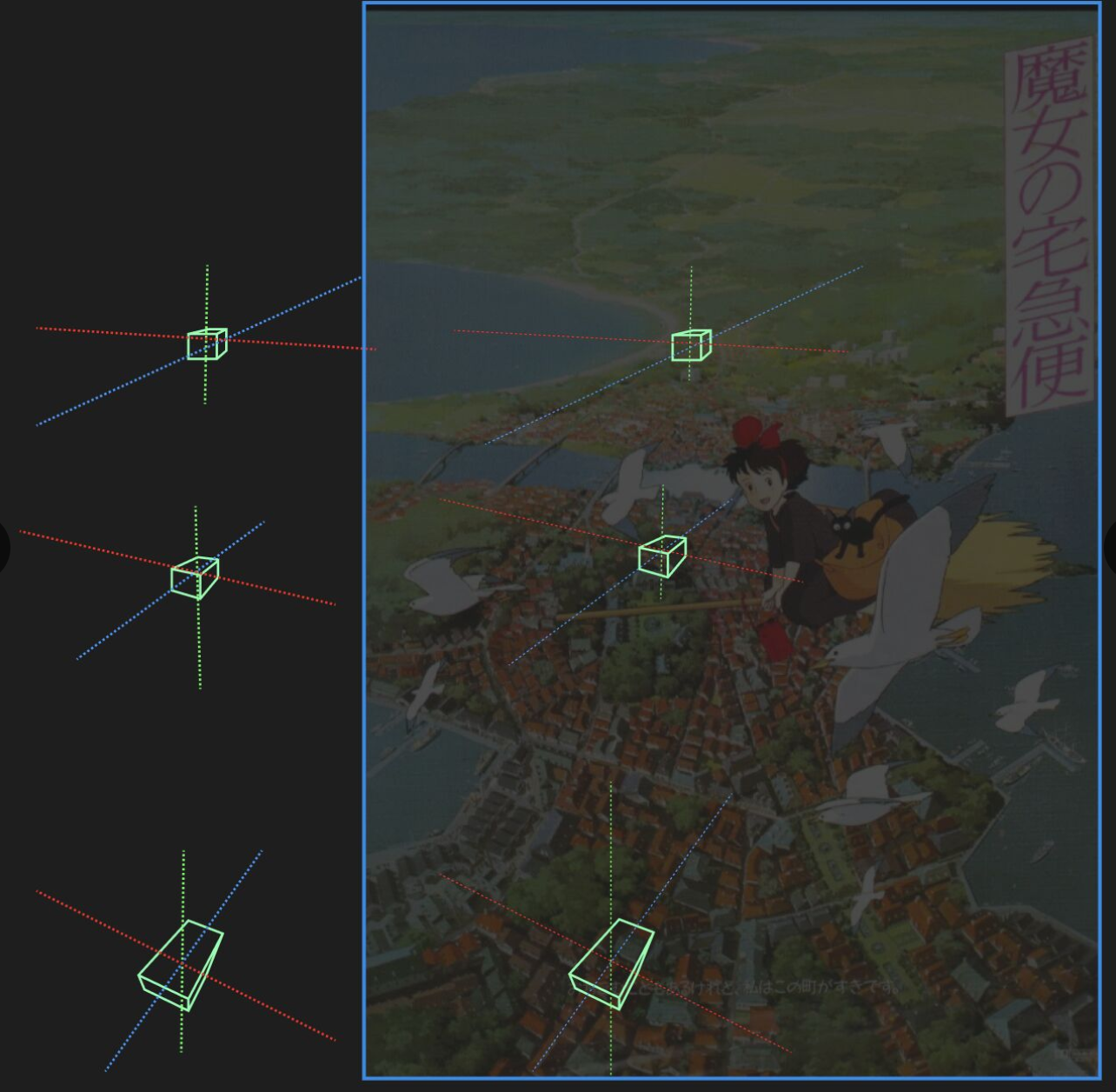
画面の下のほうは見下ろすような俯瞰で、高さを感じさせる。上にいくほど角度はゆるみ、今度は広がりが出てくる。視線を動かすたびにパースが切り替わるから、見ているだけで、ふわりと浮くような感覚になる。おそらく、狙ってやっている。画面の中で、視点そのものが飛行しているのだ。
Toward the bottom, the view looks down from above, giving a sense of height. Higher up, the angle relaxes into openness. The perspective shifts as your eye travels, and just looking at it produces a faint floating feeling. Almost certainly on purpose. Within the frame, it's the viewpoint itself that's flying.
「魔女の宅急便」は、魔女の少女が見知らぬ土地で新しい人に出会い、少しずつ育っていく物語だ。足がすくむような心細さと、勇気さえあればどこまでも飛べる爽快感。このポスターはその両方を、一言も説明せずに描き出す。それでも見る側には、うっすら伝わってくる。ずるいくらい創造的だ。説明しないのに、伝わる。これがどれだけ難しいことかは、何かを作ったことのある人ならわかると思う。
"Kiki's Delivery Service" is the story of a young witch growing up, little by little, in an unfamiliar town. The knee-weakening loneliness of somewhere new, and the exhilaration of knowing courage alone lets you fly — the poster draws both without a single word of explanation. And somehow it comes through anyway. It's almost unfairly creative. It communicates without explaining — and anyone who has ever made something knows how hard that is.
画像生成AIは、これができるか Can Image Generation AI Do This?
ある効果を狙って、あえて正確さを崩す。これは「正確に描ける」の先にある、もう一種類の知性を要求する気がする。プロンプトに「パースを崩して」と書くことはできる。でも、どこを・どれくらい・何のために崩すかは、物語と感情の理解からしか出てこない。「人間に近い身体があれば学べる」という話もよく聞くけれど、案外、身体そのものは要らないのかもしれない。「この崩し方はこの効果を生む」という組み合わせを大量に学べば、近いところまで行ける可能性もある。答えは出ない。でも、芸術の創造性を考えるうえで、ずっと座っていたくなる問いだ。
Deliberately breaking accuracy in pursuit of an effect — that seems to demand another kind of intelligence, one that lies beyond "drawing correctly." You can type "break the perspective" into a prompt. But where, how much, and what for — that only comes from understanding the story and its emotions. You often hear that a human-like body would be needed to learn this sensibility. But maybe not: learning, at scale, which distortions produce which effects might get you most of the way there. No answer yet. As a question about creativity in art, though, it's one I'd happily sit with forever.
出典Sources
- [1] スタジオジブリ『魔女の宅急便』(1989)劇場ポスター © Studio Ghibli / Studio Ghibli, Kiki's Delivery Service (1989), theatrical poster.